
What to pack for an enduro ride in Merzouga
Sort your kit into three places: on your body, in your riding bag and back at the meeting point. Then confirm what will be waiting for you in your size.
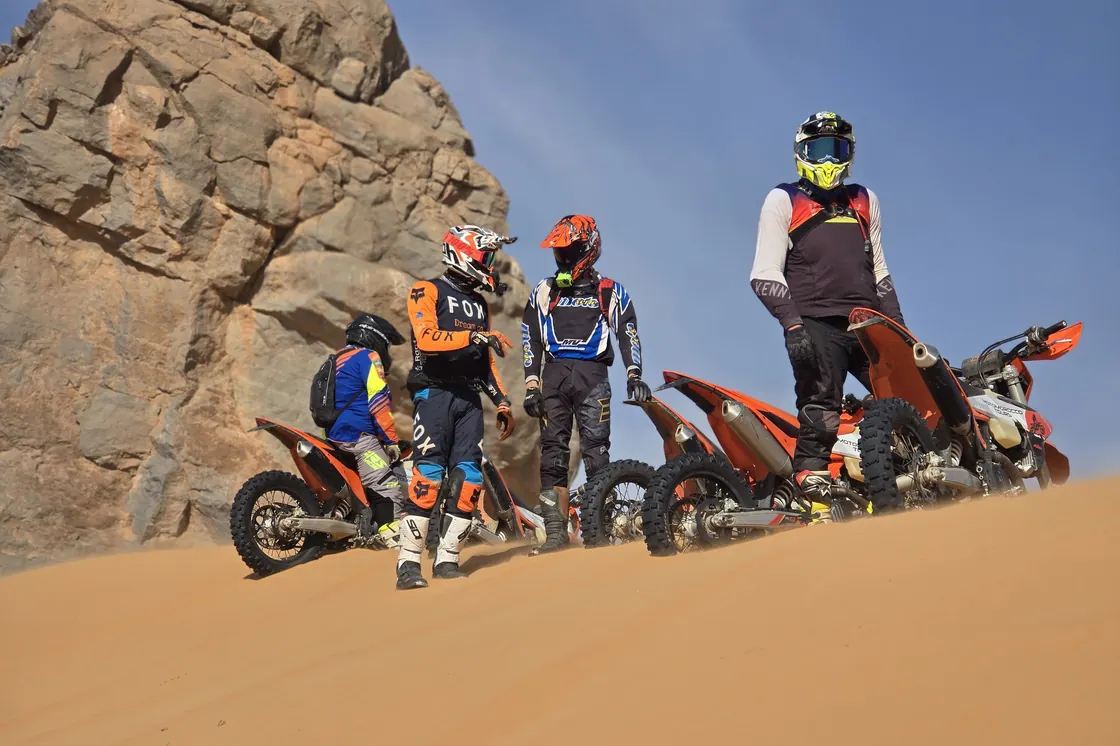
Find out what will be waiting for you
A photograph can tell you that someone wore boots and goggles on a ride. It cannot tell you that a pair in your size will be available on the date you arrive. Before setting aside baggage space, make two columns: bringing from home and confirmed for collection in Merzouga. An unanswered item belongs in neither column yet.
Start with a motorcycle helmet, proper riding goggles or suitable eye protection, off-road boots, gloves, knee and upper-body protection, and riding trousers and jersey. The Motorcycle Safety Foundation’s DirtBike School is a useful reference for basic off-road gear. Ask Yassine and team for the actual equipment list and sizes for your proposal. A headscarf or ordinary sunglasses will not do the job of riding goggles.
| Item | Detail to check |
|---|---|
| Helmet and goggles | Fit them together. If you wear glasses, try those underneath the goggles too. |
| Boots and knee protection | Give your usual boot size and sizing system. Check that the boots fasten with your riding socks and protection in place. |
| Anything you will borrow | Ask whether the item is reserved, included in the price or charged separately. |
What goes with you on the bike
Lay out what you actually need between stops. A water bottle or hydration pack you already know how to use, a small lens cloth in its own pouch, and a zipped pocket for essentials will get used. A cloth sitting loose at the bottom of a dusty bag is less helpful than one you can reach without unpacking everything. Confirm where water is available on the proposed ride.
Try the packed bag over your riding layers before travelling. Can you fasten the buckles, reach what you need when stopped and move comfortably? If you usually wear a backpack over a chest protector, try them together. Keep a phone or camera stowed while riding and take it out at an agreed stop. The group photograph is better when everyone has parked and can be in it.
What stays at the meeting point
Pack a small change bag separately from the riding kit: dry socks, a clean shirt, comfortable shoes and a bag for used gear. Keep the clean clothes away from the boots. If you are continuing towards Fes or the Dades Valley afterwards, being able to change without emptying your suitcase in a car park is a small pleasure worth planning for.
Ask in advance where bags and valuables can be kept and whether you return to the same place. On a multi-day proposal, clarify whether luggage moves with you, how much can travel, and what you can reach during the day. A toothbrush in the overnight bag is fine; your goggles in that same bag are not.
If you are flying with your own kit
Get the airline’s current baggage dimensions and allowance for your actual ticket. Holding a helmet by its strap at check-in is a poor time to discover that your boot bag counts as your only cabin item. Choose which pieces you most want to bring because they fit you; then measure the packed bags, not the empty ones.
Take a picture of your laid-out kit for your own reference and keep a short list of what is in each bag. If one bag arrives late, you can tell the team exactly what is missing before leaving the airport. Do not count on a replacement of the right size until someone has confirmed it.
A short kit message you can actually use
“I’m bringing my own helmet, goggles and gloves. I normally wear EU 43 riding boots. Can you confirm boots, knee protection and upper-body protection in my size, what they cost, and where I leave my bag during the ride?”
For a group, send a line for each rider instead of a single list of sizes. For a winter start, also ask which layer you can leave at the meeting point when the day warms up. The useful packing list is the one that matches your body, your luggage and your particular day in Merzouga.