
Erg Chebbi in five riding photographs
A line of orange bikes on the skyline, two tyres on a narrow ridge, a pair of gloves in the shade. Five frames from the riding archive, and what to look for in each.
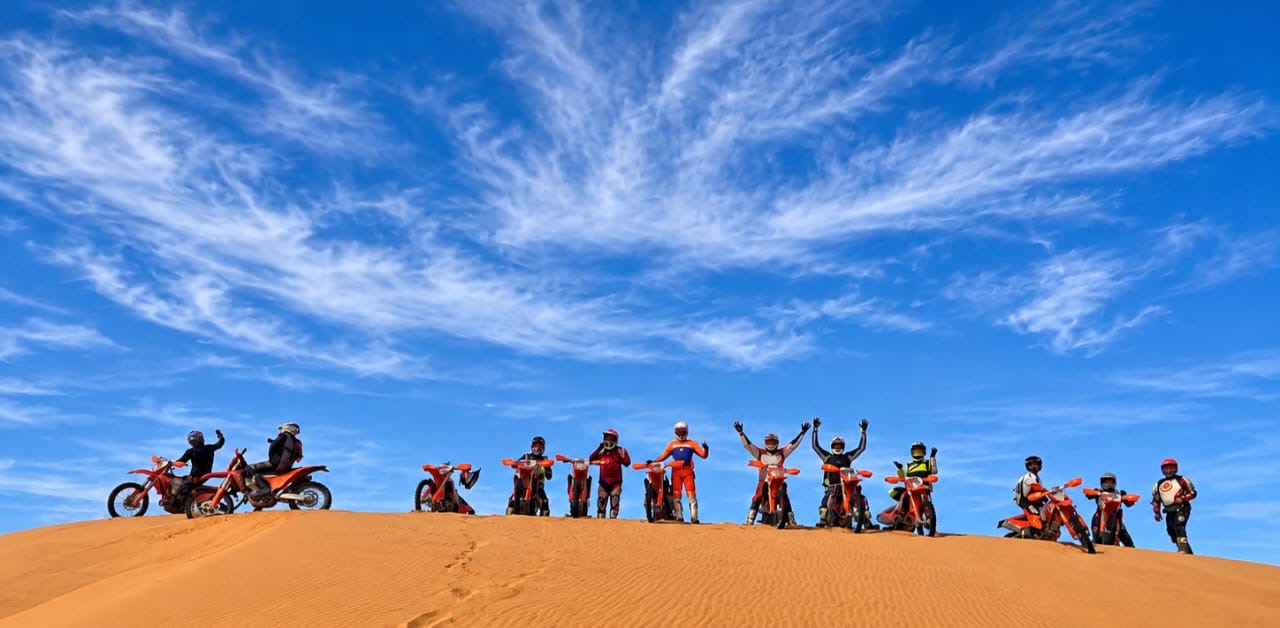
01 / A line above the sand
Look at the opening photograph again. The riders and motorcycles take up a slim band between orange sand and blue sky. At one end a bike stands side-on; farther along, riders have raised their arms. Below them the wind has drawn much finer lines across the sand. The two scales sit in the same frame: the group you could cross in a few steps and a landscape with no obvious edge.
It is also a useful picture to show someone who is not riding with you. The pauses are part of what you have come to see. Without one, there would be no line of people on the horizon.
02 / Two bikes on a crest
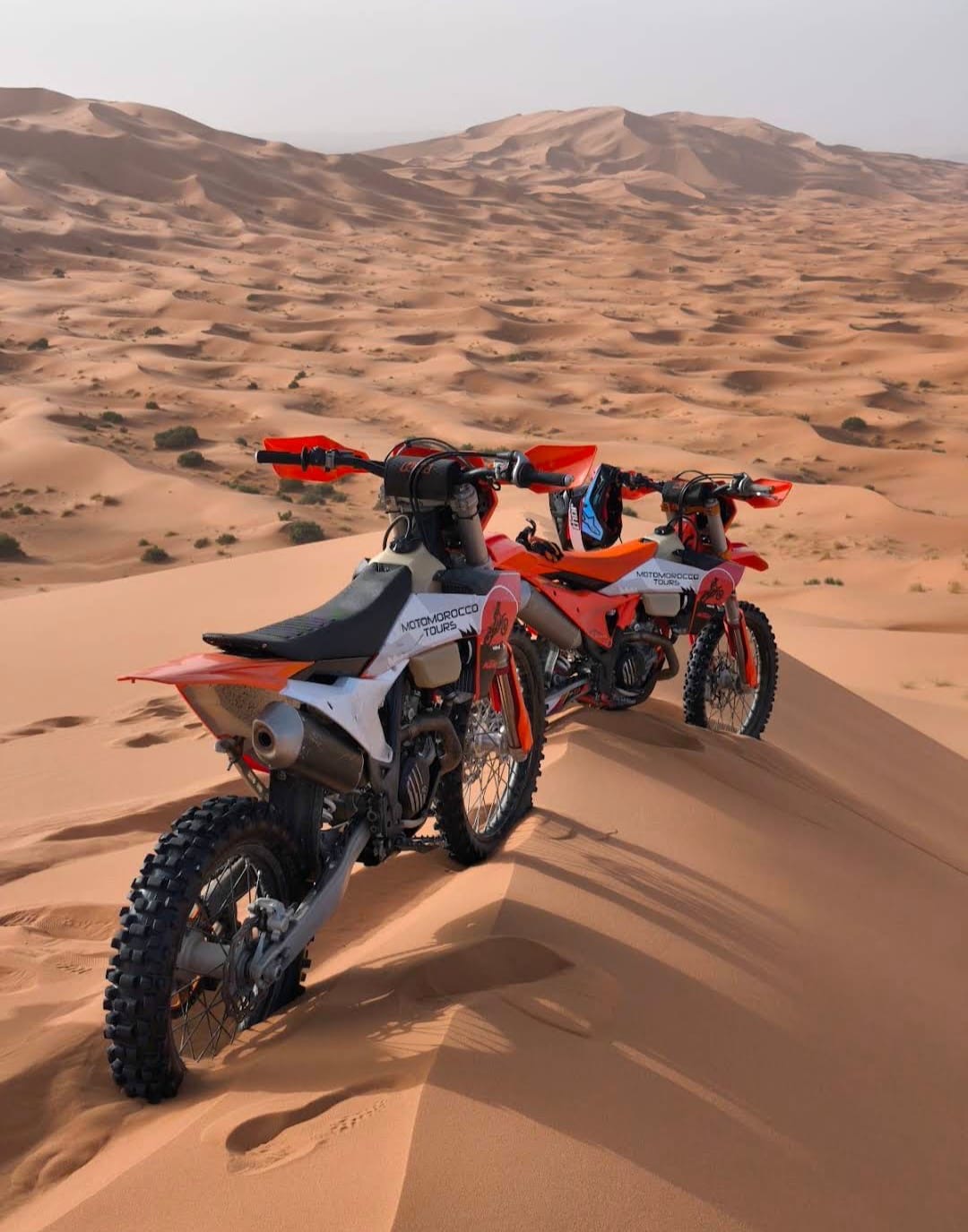
The nearest rear tyre sits in a narrow groove. A second orange motorcycle follows the same diagonal, then the eye carries on across ridge after ridge. There is no need for a person in the frame to give a sense of scale: a saddle and two handlebars do the job.
Open the full photograph and look beyond the bikes. What reads as a single sweep of sand in a small thumbnail separates into pale slopes, darker hollows and patches of scrub. A still photograph can reveal that shape beautifully. It cannot tell you what lies just over the nearest edge.
03 / The ground changes colour
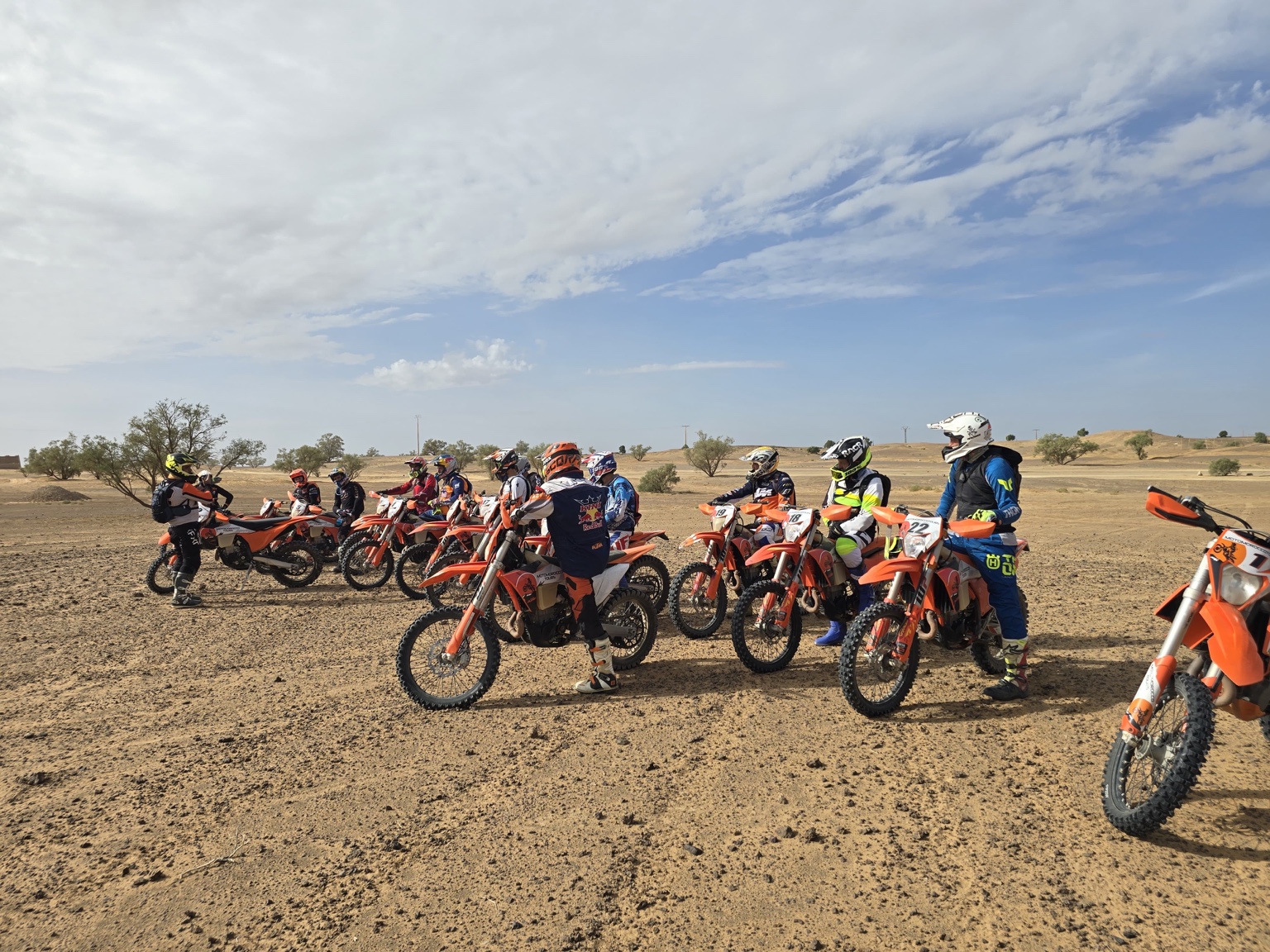
Here the bikes are gathered on a broad, stony plain. A rider on the left faces the others. Several front wheels point in different directions, and a stretch of low, open country is visible between the helmets and the cloud line. After the tight dune crest, the space feels wider even with more people in it.
This is the frame to keep if you are trying to describe what you want to ride. “I like the look of that open ground as well as the dunes” tells the team something a request for a desert ride alone does not. The photograph is a reference for the conversation, not a promise of an exact stop.
04 / Where rock meets sand
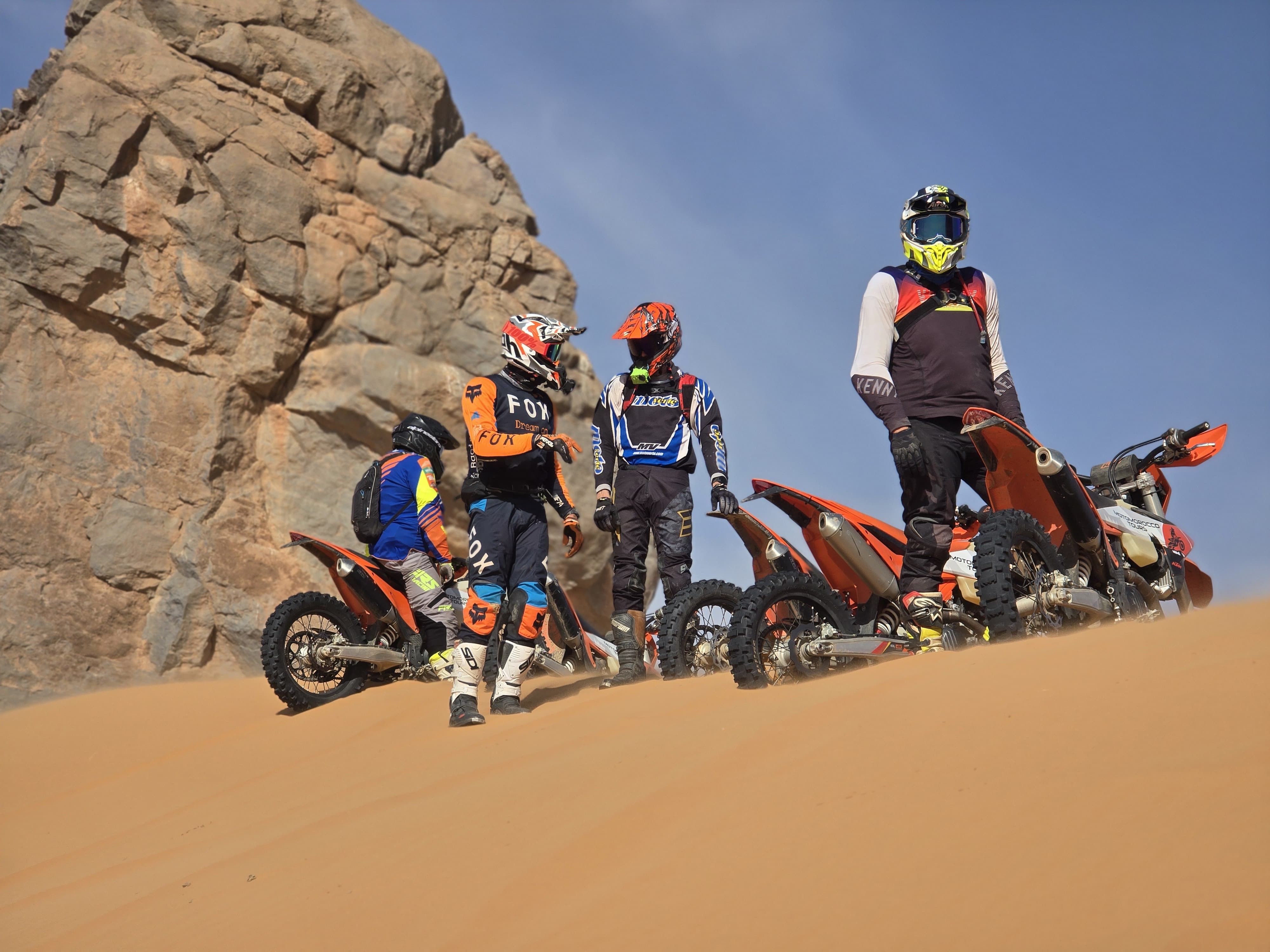
A rock wall fills much of the frame. Beside it, the riders’ orange and blue kit picks up the colour of the motorcycles, while the face of the rock breaks the clean horizon of the earlier photographs. The sand still runs right up to their boots.
One of the pleasures of looking closely here is seeing how little the camera needs to move to change the subject. Look high and it is a picture of stone and sky. Look low and it is a portrait of riders paused together. The full frame keeps both.
05 / A stop in the shade
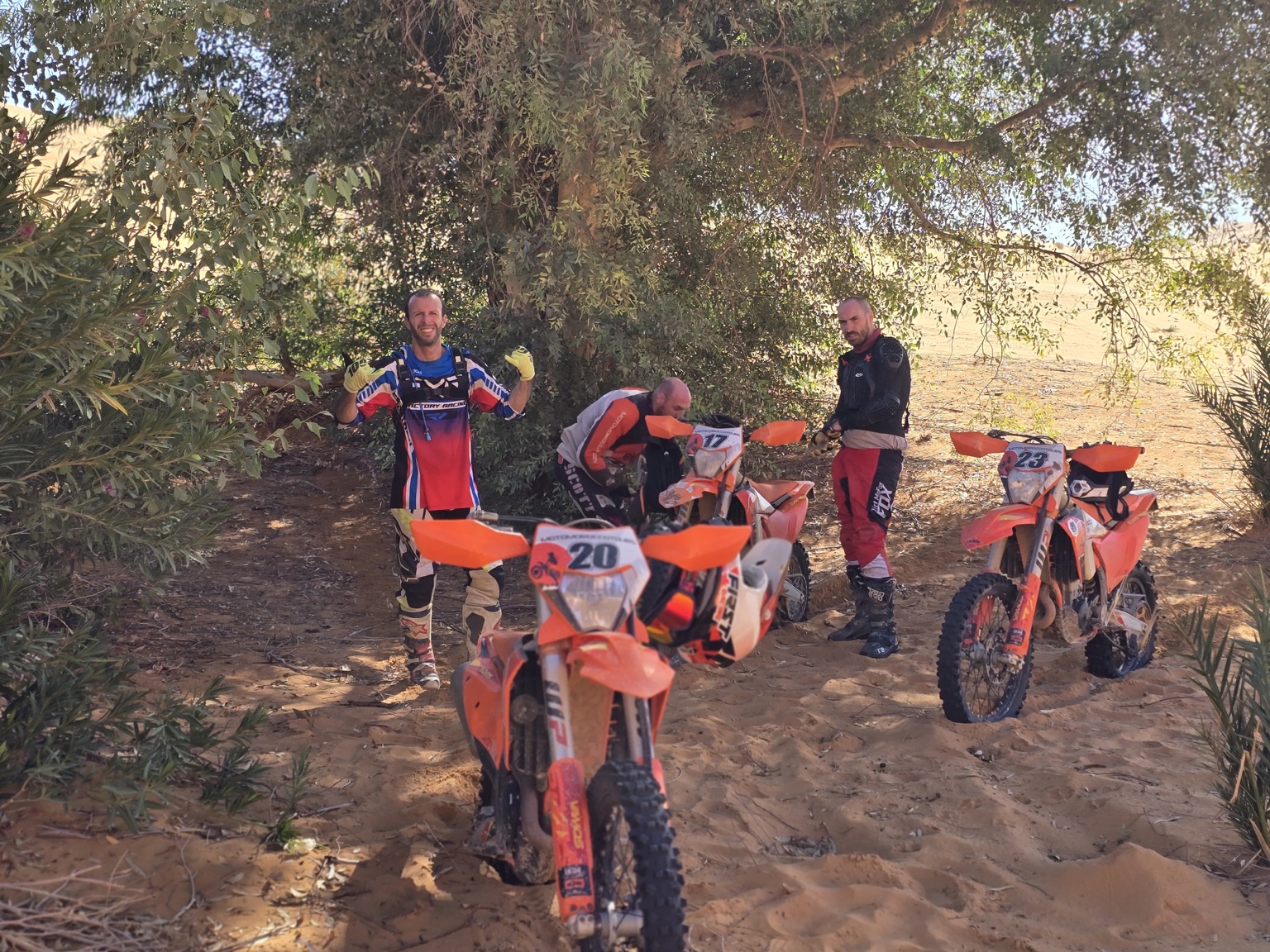
Three parked bikes sit under branches rather than a blue horizon. A pair of yellow gloves catches the light. Someone leans over a motorcycle, another rider stands beside it, and the shade breaks into patches on the ground. It is the least panoramic picture of the five, and the easiest one to imagine stepping into.
If you take photographs on your own ride, tell the guide you would like a stop and let the group settle first. Ask before making a close portrait. Then give yourself one frame for the detail you would otherwise forget: the line of a tyre, a pair of gloves or the patch of shade where everyone finally took off their helmets.